
Last updated September 10, 2026
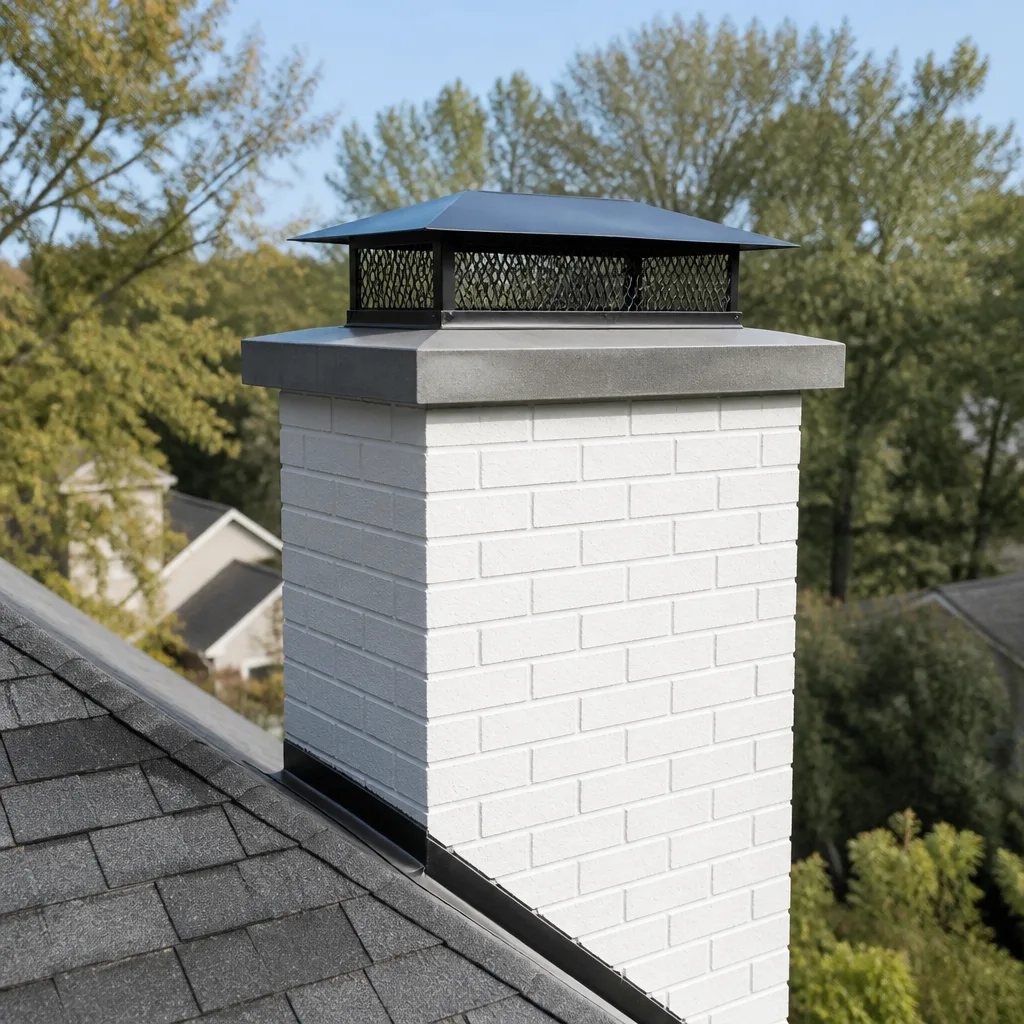
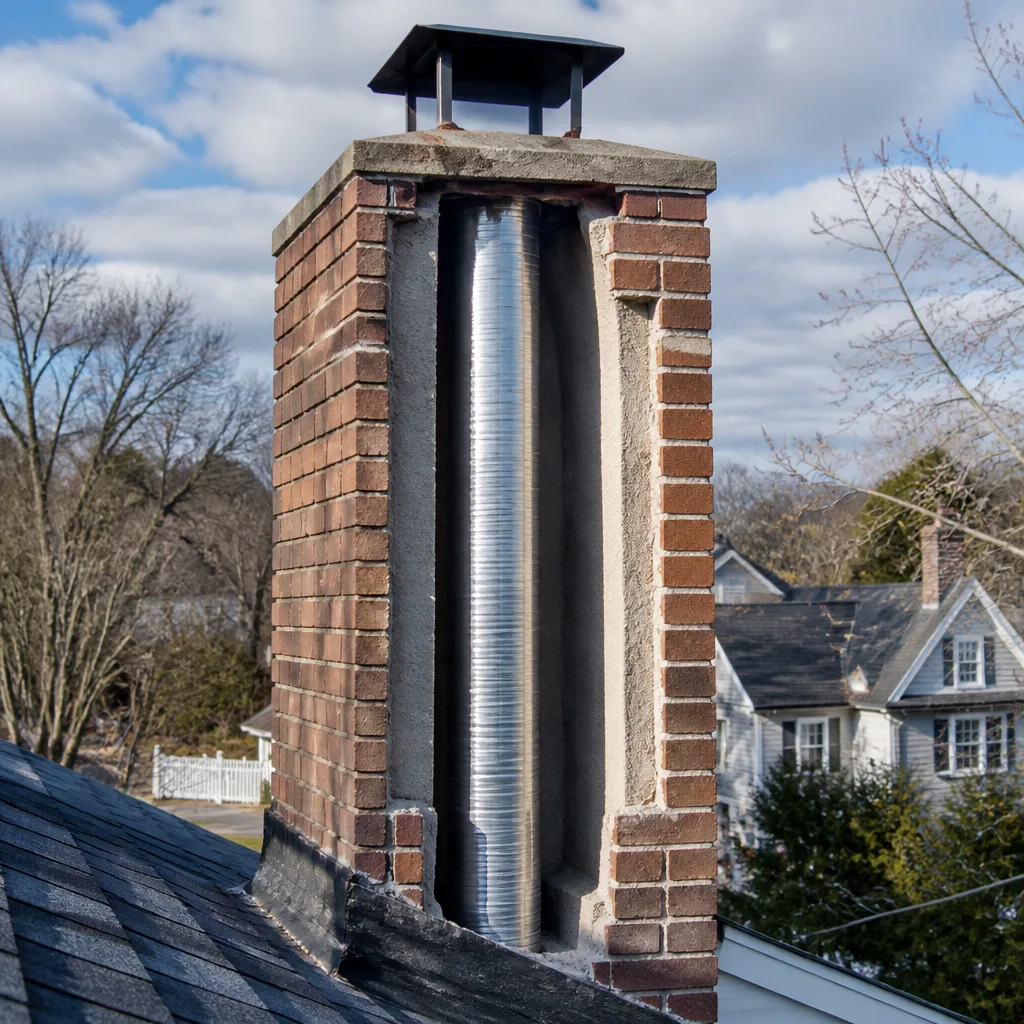
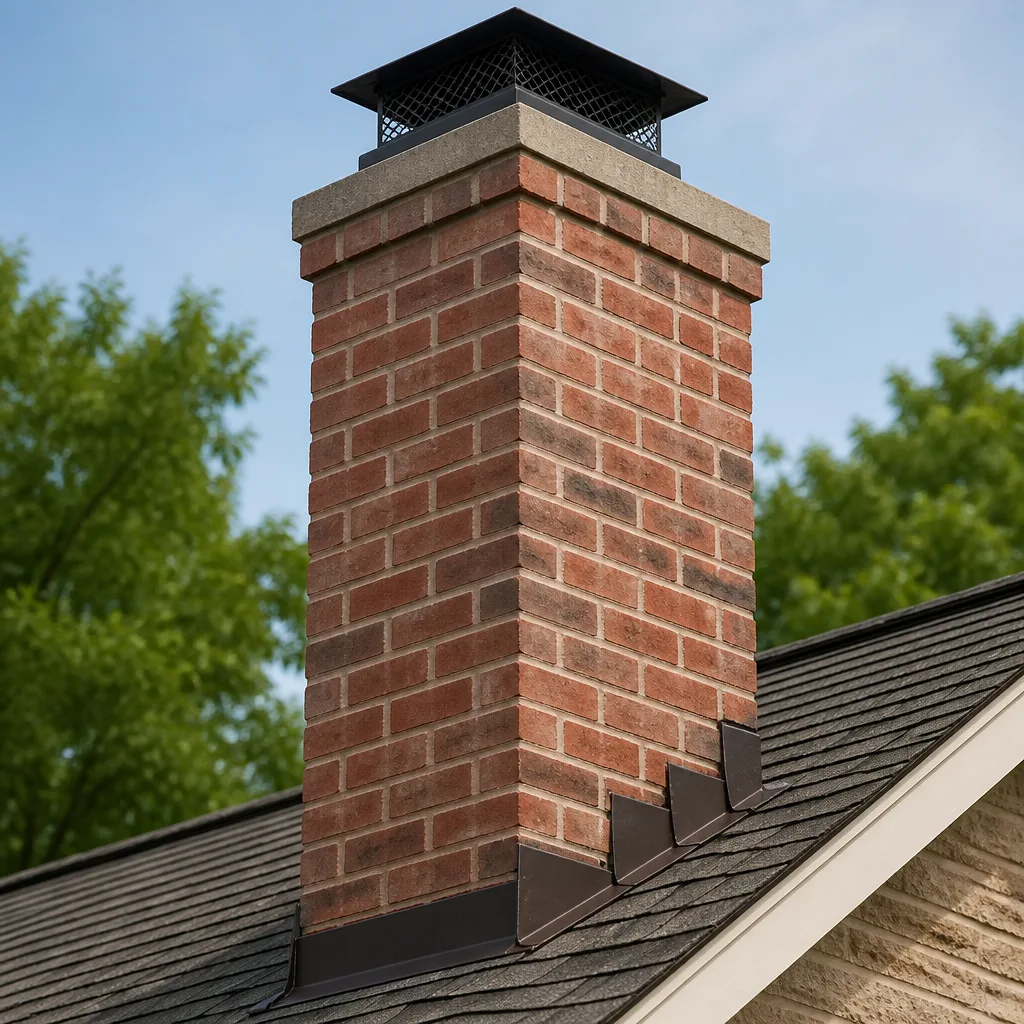
Level 1 sweep and inspection to the NFPA 211 annual standard - flue, crown, cap, and flashing checked and photographed
Chimney sweep logs do not sweep chimneys. They loosen some creosote - which then falls where a brush and vacuum still have to collect it.

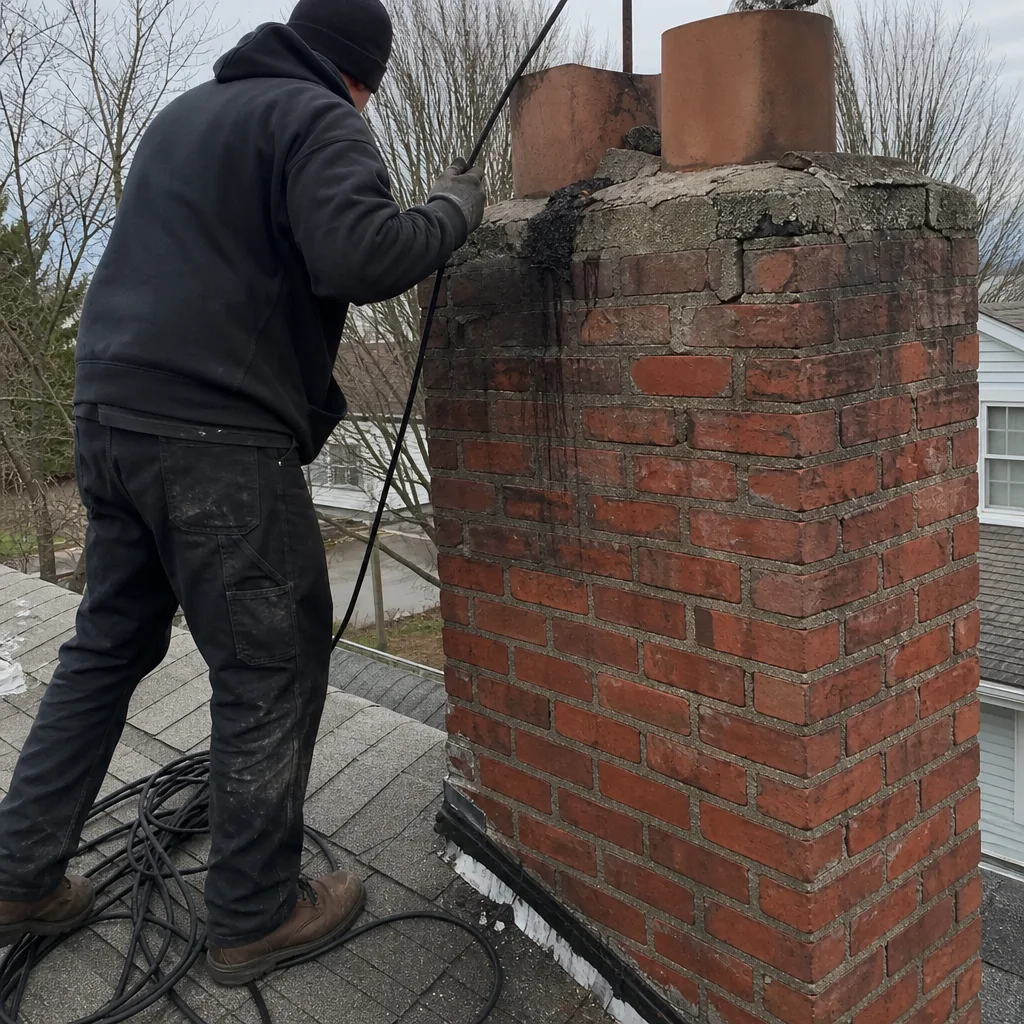 Before
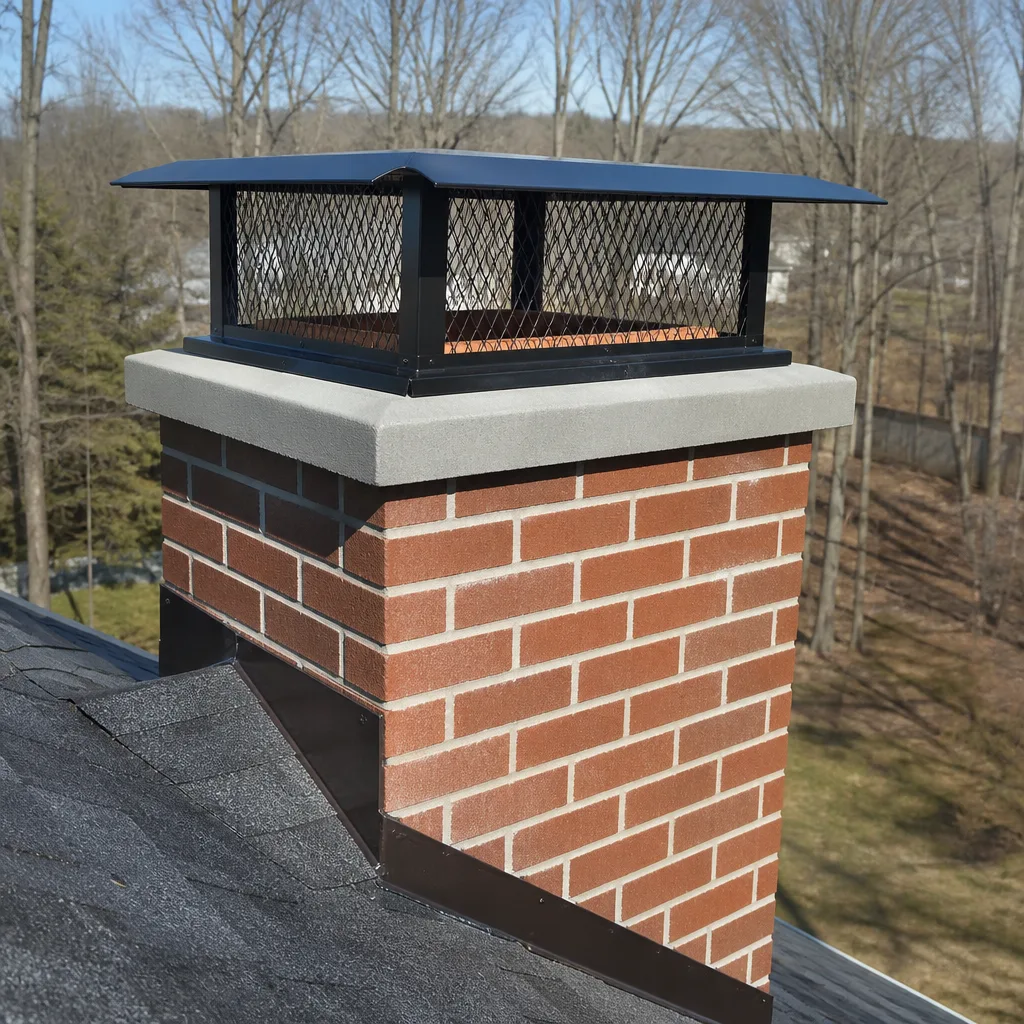 After
After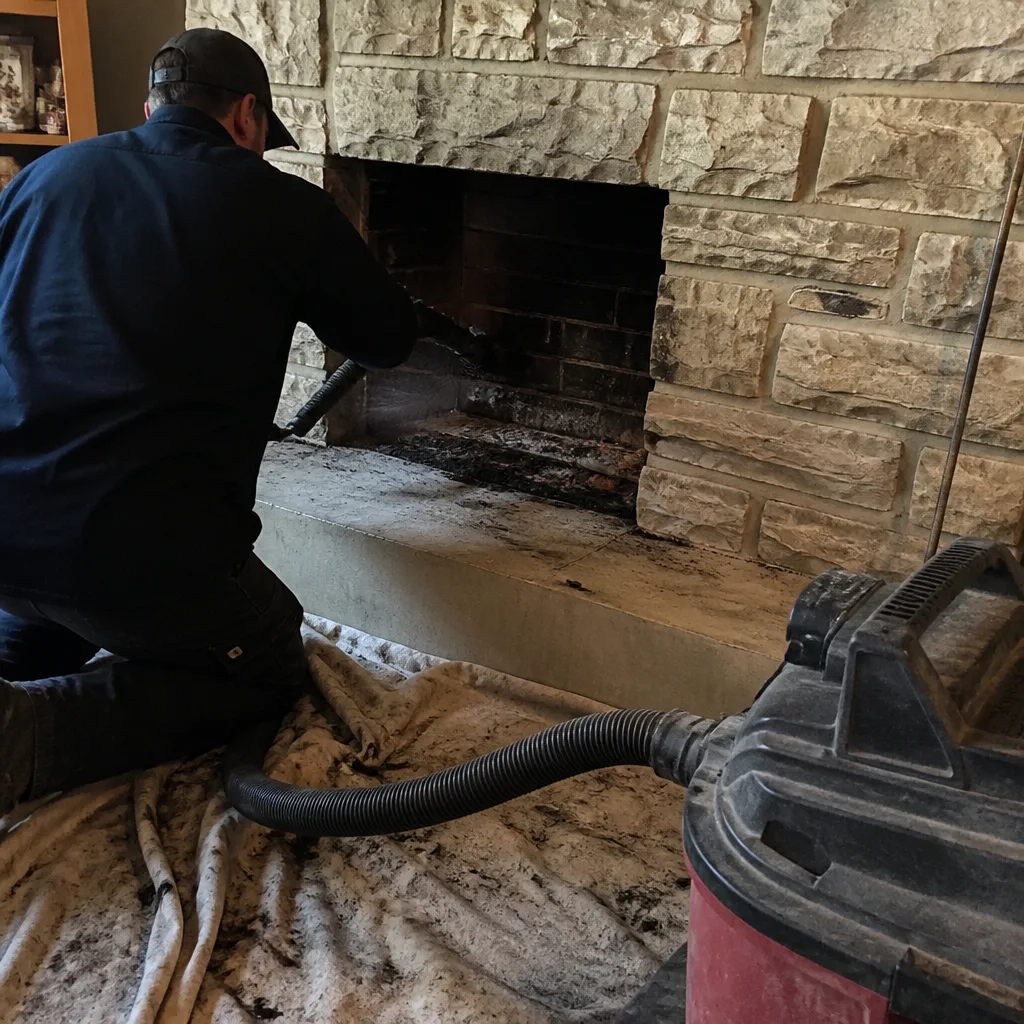 Before
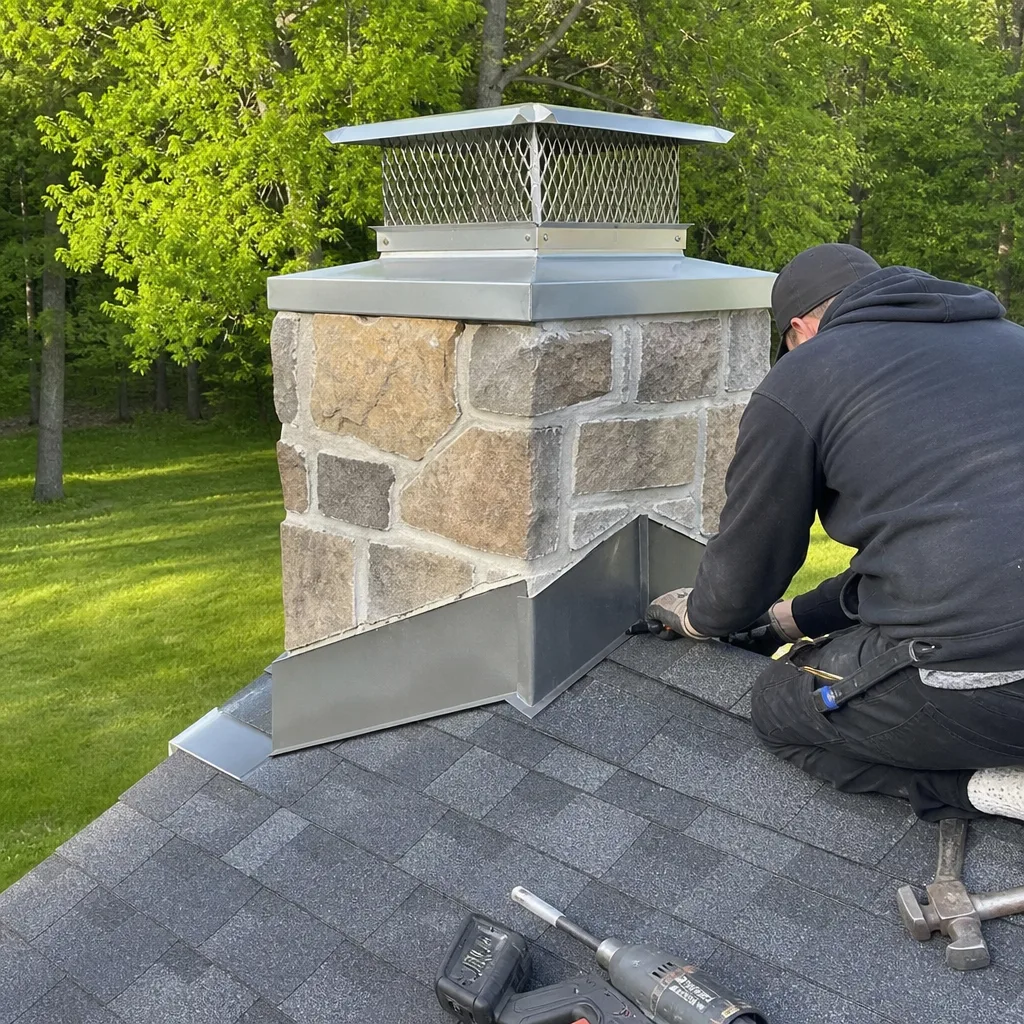 After
After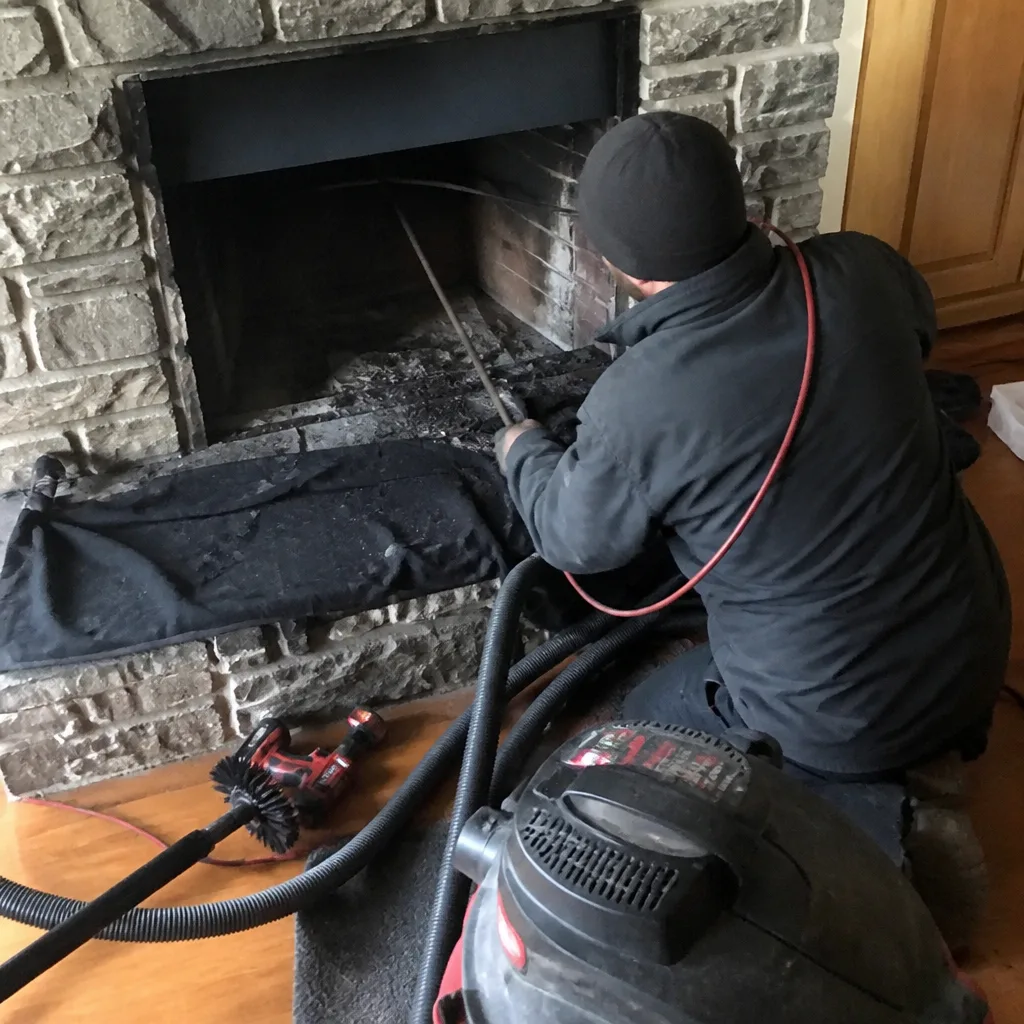 Before
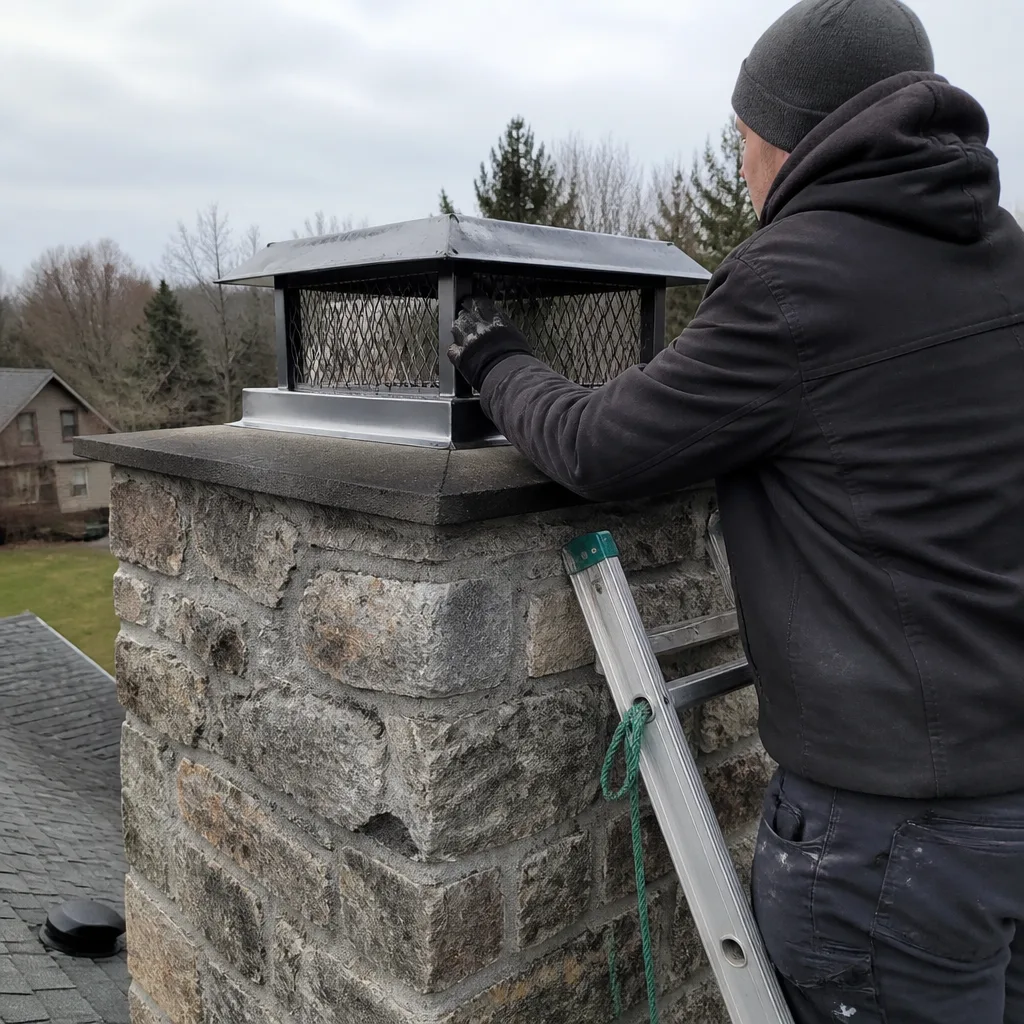 After
AfterHow to Hire a Chimney Cleaning Contractor in Milford: A Step-by-Step Guide
In Pennsylvania, anyone can legally call themselves a chimney sweep. There is no state license required, no mandatory insurance, no regulatory body checking the work. That surprises most Milford homeowners, especially those who assume the trade carries the same oversight as plumbing or electrical work. After 42 years in this field, we’ve seen what that lack of regulation means in practice: good technicians who take real pride in the craft, and operators who disappear with the first freeze, leaving bad work and no recourse behind. This guide walks through exactly how to tell the difference before you hand over a deposit.
Quick Answer
To hire a chimney cleaning contractor in Milford, verify CSIA certification and active liability insurance in writing, ask five specific questions about documentation and warranty coverage, get a detailed written quote that lists labor and materials separately, and avoid any operator who pressures for same-day booking or cannot produce a certificate of insurance on request. In a small market like Milford, where review volume is thin and word-of-mouth travels slowly, the questions you ask before the job matter more than the price quoted on the phone. For Chimney Cleaning Cost Breakdown: The Milford Homeowner’s Reference for 2026, see our dedicated guide.
Table of Contents
- What Credentials Actually Matter in Pennsylvania
- Five Questions to Ask Before You Book
- Red Flags in the Pocono Chimney Market
- How to Compare Quotes When Prices Diverge
- What Your Written Contract Should Include
- Milford-Specific Considerations: Climate, Codes, and Common Issues
- Common Mistakes to Avoid
- When to Call a Professional
- Frequently Asked Questions
- The Bottom Line
What Credentials Actually Matter in Pennsylvania
Pennsylvania does not license chimney sweeps. The state does not require bonding, does not inspect work sites, and does not maintain a complaint database specific to the trade. This is not common knowledge among homeowners, and many assume the uniform and the brush confer some official status. They do not.
What matters instead are credentials earned voluntarily and maintained deliberately. Here is what to verify, and how to verify it.
CSIA Certification
The Chimney Safety Institute of America (CSIA) is the only nationally recognized certification body for chimney sweeps. A CSIA-certified sweep has passed a written examination on fire codes, combustion science, and chimney mechanics, and must recertify every three years through continuing education or re-examination. Ask for the technician’s CSIA ID number. You can verify it at csia.org. If the contractor deflects or claims certification is “in process,” that is your signal to keep looking.
In our experience serving Milford, about half the calls we receive are from homeowners who previously hired an uncertified operator and now need corrective work. The most common issue: a “sweep” who ran a brush through the flue but never inspected the liner, missing cracked terra cotta or failed mortar joints that allowed combustion gases into the wall cavity.
Liability Insurance
Request a certificate of insurance directly from the contractor’s insurance agent, not from the contractor themselves. The certificate should show:
- General liability coverage of at least $1 million per occurrence
- The policy effective and expiration dates
- The agent’s contact information for verification
Call the agent and confirm the policy is active. This takes five minutes and has saved more than one Milford homeowner from financial exposure when an uninsured technician damaged a roof or, worse, fell from one.
Workers’ Compensation
If the contractor has employees, Pennsylvania requires workers’ compensation insurance. Solo operators may legally exempt themselves, but if a crew shows up, ask to see the workers’ comp certificate. A homeowner can be held liable for injuries on their property if the employer lacks coverage.
Bonding
Bonding is less common in residential chimney work than in commercial construction, but a contractor who carries a surety bond has undergone a financial and background review by a bonding company. It is a positive signal, not a requirement.
We carry full liability and workers’ compensation coverage at Hearthstone Chimney Co., and we provide certificates without hesitation. Any contractor who treats this request as suspicious is revealing something about their own practices.
Five Questions to Ask Before You Book
Phone quotes are easy. Phone quotes from contractors who have actually thought through their process are rare. These five questions separate the two.
- How do you document the condition of my chimney before and after the work?
A professional sweep should describe a camera inspection, photos of the flue interior, and a written report. If the answer is “we’ll let you know if we see anything,” you are buying a brush rental, not an inspection. Our chimney cleaning and sweep service in Milford includes Level-2 camera documentation with photos you can see and a plain-English verdict on every job. - What does your warranty cover, and will I receive it in writing?
Verbal promises dissolve the moment the truck leaves your driveway. Ask specifically: does the warranty cover labor, materials, or both? For how long? What voids it? At Hearthstone, our 90-Day Done Right Promise covers every job in writing with no arguing. If it is not right, we come back. That is the Keystone Standard. - Will the technician who arrives be an employee or a subcontractor?
Subcontracting is not inherently bad, but employees receive consistent training, background checks, and uniform standards. Subcontractors may not. We use only background-checked, uniformed employees, and most jobs are completed in a single visit. - What is your pricing structure, and what could change the final bill?
Vague answers here protect the contractor, not you. A proper quote lists labor hours, materials by name, and any conditions that would trigger additional charges. Our no-hassle upfront pricing means the number on the estimate is the number on the invoice. - How long have you been serving the Milford area, and can you provide local references?
Longevity in a small market like Milford is hard to fake. A contractor who has been here ten years has a reputation. A contractor who “just expanded to the Poconos” may not survive the winter. We have served local communities for over 42 years, and we plan to be here in thirty more.
Red Flags in the Pocono Chimney Market
The Pocono region, Milford included, sees a predictable surge of seasonal operators each autumn. They appear after the first cold snap, blanket Facebook groups and roadside signs with cut-rate offers, and vanish before the spring thaw. By then, the “lifetime warranty” is a disconnected phone number and the “local office” is a post box in another state.
Here are the specific warning signs we’ve observed in our four decades of work:
- Out-of-state plates on a truck with local signage. Some operators register vehicles in lower-cost states while claiming to be “your local Pocono sweep.” The disconnect matters if you need warranty service.
- Pressure to book immediately for a “seasonal special.” Legitimate sweeps in Milford stay busy through reputation, not urgency tactics. Any offer that expires before you can verify credentials is designed to prevent verification.
- No physical address or a residential address listed as headquarters. A legitimate business has a bricks-and-mortar location where records are kept and warranty claims can be pursued.
- Refusal to provide a written quote or contract. Verbal agreements favor the party with the better memory, which is never the homeowner six months later.
- Quotes significantly below local market rate without clear explanation. In Milford, a proper chimney sweep with inspection typically runs $200-$350 depending on accessibility and flue condition. A quote at half that rate usually means corners cut: no camera inspection, no debris containment, no written report, or an uninsured technician.
- Demands full payment upfront. Standard practice is partial deposit or payment upon completion. Full prepayment for routine cleaning is unusual and risky.
The seasonal operator model works because homeowners in Milford, Matamoras, and Dingmans Ferry often do not use their fireplaces regularly until October or November. By then, the legitimate sweeps with established schedules are booked two to three weeks out. The fly-by-night operator offers “same day” or “this week” availability. That convenience is expensive if the work is done poorly.
How to Compare Quotes When Prices Diverge
It is common to receive quotes ranging from $150 to $400 for what seems to be the same service. The difference is rarely arbitrary markup. Here is what the price gap usually reflects:
| Price Tier | What It Typically Includes | What It Often Excludes |
|---|---|---|
| $150-$200 | Basic brush sweep, visual inspection from below, debris removal | Camera inspection, written report, photos, ladder work above roofline, creosote evaluation |
| $200-$300 | Full sweep, Level-1 or Level-2 inspection, basic documentation | May exclude exterior crown/cap evaluation or detailed photo report |
| $300-$450 | Complete sweep, Level-2 camera inspection, photo documentation, written condition report, exterior evaluation, debris containment and cleanup | Repairs if needed; but findings are documented with evidence |
The critical question is not “which is cheapest?” but “what am I actually buying?” A $175 sweep that misses a cracked flue liner has cost you $175 plus the price of the emergency repair you will need later, plus whatever damage occurred in the interim.
When comparing quotes in Milford, ask each contractor to specify:
- Will you access the roof to inspect the crown, cap, and flashing?
- Will you run a camera through the flue, and will I receive photos?
- Will you evaluate the firebox, smoke chamber, and damper operation?
- What type of creosote is present, and what does that mean for cleaning method and frequency?
- Is debris containment and post-job cleanup included?
We have rebuilt fireboxes for Milford homeowners who discovered, too late, that their budget sweep never looked inside. The chimney repair work we do in Milford often starts with correcting what a low-price operator failed to find.
What Your Written Contract Should Include
A proper chimney cleaning contract is not a novel. It is one to two pages that protect both parties by being specific. Here is what belongs in it, and what vague language actually conceals.
Required Elements
- Scope of work: “Clean and inspect chimney flue for [address]” is insufficient. The contract should state: sweep of [number] flues, Level-1 or Level-2 inspection per NFPA 211, camera inspection if applicable, evaluation of crown, cap, flashing, firebox, smoke chamber, and damper.
- Materials specified by brand or grade: If liner repair, relining, or masonry work is included, the contract should name the products: DuraFlex stainless steel liner, HeatShield cerfractory sealant, Olympia Chimney components, or equivalent professional-grade materials. “Industry standard” or “commercial grade” means nothing enforceable.
- Labor hours or flat rate: Flat rate is standard for cleaning. Time-and-materials may apply to repairs. Either is acceptable if stated clearly.
- Payment terms: Deposit amount, balance due upon completion, acceptable payment methods.
- Warranty terms: Duration, what is covered, what voids coverage, and the process for making a claim. “Satisfaction guaranteed” without specifics is marketing, not a warranty.
- Start date and estimated completion: For cleaning, same-day or scheduled date. For repairs, a window with conditions that would extend it.
Vague Language to Challenge
“As needed” or “if necessary” without defined criteria. This allows the contractor to add charges at will. If additional work might be required, the contract should state the trigger condition and the price for that condition.
“Standard cleaning” or “basic service” without NFPA reference. These terms have no technical definition. Insist on language that cites the National Fire Protection Association Standard 211, which governs chimney inspection levels.
“All work performed to code” when no code applies to chimney cleaning specifically. This sounds reassuring but is meaningless. The relevant standard is NFPA 211, not the International Residential Code.
We provide written contracts for every job, and we explain each section before asking for a signature. No homeowner should sign what they do not fully understand.
Milford-Specific Considerations: Climate, Codes, and Common Issues
Milford sits at roughly 500 feet elevation in the Upper Delaware Valley, where the climate delivers sharp temperature swings, freeze-thaw cycles from November through March, and precipitation that averages 47 inches annually. These conditions create specific stresses on chimney systems that a generic guide will not address.
Freeze-Thaw Damage to Masonry
Water enters micro-cracks in brick and mortar during warming periods, then expands when temperatures drop below freezing. In Milford, this cycle repeats dozens of times each winter. We regularly see spalling brick and deteriorated mortar joints in chimneys that appeared sound in autumn. A camera inspection reveals what exterior appearance conceals. Our fireplace services in Milford include evaluation of masonry condition and recommendations for HeatShield or traditional repointing when warranted.
Hardwood vs. Softwood Burning Patterns
Many Milford homeowners burn seasoned hardwood, primarily oak and maple, which produces dense, flaky creosote that is relatively straightforward to remove. Others burn softwood or construction scraps, which deposit glazed creosote, a hardened, fuel-like residue that requires mechanical removal and chemical treatment. The cleaning method and frequency should reflect what you actually burn, not a generic annual schedule.
Local Building Department Context
Milford Borough and Pike County do not require permits for routine chimney cleaning, though Chimney Cleaning Permits, Codes & Inspections in PA: What You Need to Know covers when they do apply. Permits are required for liner replacement, structural rebuilds, or new chimney construction. A contractor who claims a permit is needed for standard sweeping should be questioned. A contractor who fails to pull required permits for liner or rebuild work is exposing the homeowner to code violations and insurance complications.
Neighborhood-Specific Patterns
In the older homes near the Delaware River, we encounter unlined chimneys originally built for coal or oil conversion, now pressed into wood-burning service without adequate flue sizing. In the newer developments off Route 6 and 209, we see factory-built metal chimneys with failed chase covers and water intrusion into the structure. The inspection protocol differs, and a contractor who treats every Milford chimney identically is not inspecting thoroughly.
Common Mistakes to Avoid
- Booking based on price alone. The lowest quote in a small market often reflects uninsured labor, no documentation, and no recourse if the work fails. In Milford, where contractor options are limited, the cheapest choice frequently becomes the most expensive.
- Assuming a “clean” chimney is a safe chimney. Sweeping removes combustible deposits. It does not repair cracked liners, rebuild deteriorated crowns, or address improper clearances. The inspection matters as much as the cleaning.
- Neglecting to verify insurance annually. Policies lapse. A contractor who was insured last year may not be insured this year. Request a current certificate each time you book.
- Failing to ask about the technician’s specific qualifications. The company owner may be CSIA-certified. The employee who arrives at your door may not be. Ask who will perform the work and what their credentials are.
- Accepting verbal warranties. “We’ll take care of you” is not a warranty. “90-Day Done Right Promise, in writing, no arguing” is. Demand the document.
- Ignoring the off-season. Spring and summer scheduling in Milford offers more flexibility, often better attention to detail, and the opportunity to address findings before the burning season begins. The autumn rush compresses everyone’s patience.
- Not requesting photos of previous similar work. A contractor with genuine local experience should be able to show you documented before-and-after images from Milford or immediate neighboring communities.
When to Call a Professional
Certain conditions require immediate professional evaluation, not routine scheduling. Call a certified sweep promptly if you notice smoke entering the room during fireplace use, a strong odor of creosote or decay even when the fireplace is cold, visible cracks in the firebox or exterior masonry, water staining on walls or ceilings near the chimney, or a damper that no longer opens or closes fully.
Carbon monoxide and chimney fire risk are real and specific. A blocked or damaged flue can force combustion gases into living spaces. Excessive creosote buildup can ignite at temperatures above 1,000 degrees Fahrenheit, damaging the chimney structure and potentially spreading to the home.
Hearthstone Chimney Co. offers free estimates in Milford. Our phones are answered by a live person 24 hours a day, 7 days a week. Call (610) 991-8179 to schedule, or to discuss what you’re observing and whether it requires urgent attention.
Frequently Asked Questions
A professional chimney sweep with Level-2 inspection in Milford typically costs $200-$350 for a standard single-flue system. Prices increase for multi-flue chimneys, difficult roof access, or heavy creosote buildup requiring specialized removal. Call (610) 991-8179 for an exact quote based on your specific chimney configuration. Estimates are free.
The National Fire Protection Association recommends annual inspection, with cleaning as needed based on deposit accumulation. In Milford, where many homeowners burn regularly through a five-month heating season, Seasonal Chimney Cleaning Care for Milford: Year-Round Homeowner’s Guide explains why annual sweeping is prudent. Those who burn daily or burn softwood may need more frequent service. A camera inspection determines actual condition rather than assuming a schedule.
You need a new liner if the existing one is cracked, deteriorated, improperly sized for your appliance, or absent entirely. We do not recommend liner replacement without camera documentation you can see yourself. In Milford’s older homes, unlined or damaged terra cotta flues are common, but the decision to reline should be based on evidence, not a sales pitch. Our 90-Day Done Right Promise applies to all liner work.
Skipped maintenance allows creosote accumulation, which increases chimney fire risk and can restrict draft, causing smoke and carbon monoxide to enter living spaces. Water intrusion from deteriorated crowns or flashing causes structural damage that becomes more expensive to repair each season. In Milford’s freeze-thaw climate, deferred masonry maintenance accelerates rapidly. The cost of prevention is consistently lower than the cost of remediation.
No. Pennsylvania does not require any certification, license, or training to operate as a chimney sweep. CSIA certification is voluntary and represents the industry’s recognized standard for technical competence and ethical practice. We require CSIA certification for all our technicians because the absence of state oversight places greater responsibility on the contractor to self-regulate.
Mechanical brushing of a readily accessible flue is physically possible for a capable homeowner. However, without camera inspection, you cannot assess liner condition, creosote type, or hidden damage. Without roof access and proper safety equipment, you cannot evaluate the crown, cap, or exterior masonry. And without knowledge of combustion science and clearance requirements, you may miss conditions that create genuine hazard. We document what we find so you can make informed decisions, not assumptions.
The Bottom Line
Hiring a chimney contractor in Milford requires more diligence than in a major market because the regulatory environment offers no protection and the small population produces limited review data. For more guides & resources on protecting your home, explore our blog. The credentials that matter are CSIA certification, verifiable insurance, and a written warranty you can enforce. The questions that reveal competence concern documentation, not price. The red flags are urgency, vagueness, and reluctance to provide proof. A proper contract specifies scope, materials, and warranty in plain language. And a contractor with decades of local presence has more at stake in every job than one who arrived with the autumn leaves.
We have served this region for over 42 years. We answer our phones with a live person, every hour of every day. Our technicians are background-checked, uniformed, and equipped to complete most jobs in a single visit. We document every inspection with photos and a plain-English verdict. And we back every job with the 90-Day Done Right Promise, in writing, no arguing. Done right, and we stand behind it.
Call (610) 991-8179 for a free estimate in Milford. We’ll be there when we say.
Written by Russell Haines, Owner at Hearthstone Chimney Co., serving Milford since 2014.